On This Page
On This Page- What Happened to Mortgage Rates?
- Why Oil Prices Are Affecting Mortgage Rates
- Why Rates Improved on Friday
- What the Federal Reserve Could Change Next Week
- What Does a 0.04% Rate Drop Actually Save?
- Should Buyers Wait for a Bigger Drop?
- What About Refinancing Later?
- What Buyers Should Watch Now
- The Bottom Line
Mortgage rates finally moved in the right direction on Friday. Before we start celebrating, though, let’s put that sentence in perspective. After climbing to their highest level in more than a year, one widely followed daily mortgage-rate index dropped from 6.85% to 6.81%. That is an improvement. It is also only four-hundredths of a percentage […]
Mortgage rates finally moved in the right direction on Friday.
Before we start celebrating, though, let’s put that sentence in perspective.
After climbing to their highest level in more than a year, one widely followed daily mortgage-rate index dropped from 6.85% to 6.81%.
That is an improvement.
It is also only four-hundredths of a percentage point.
So this was less of a dramatic mortgage-rate comeback and more like the market taking one small step away from the edge.
Quick answer: Mortgage rates eased modestly after oil prices pulled back from recent highs. But rates remain elevated, energy-market volatility is still a problem, and the Federal Reserve’s upcoming meeting could create another round of movement.
What Happened to Mortgage Rates?
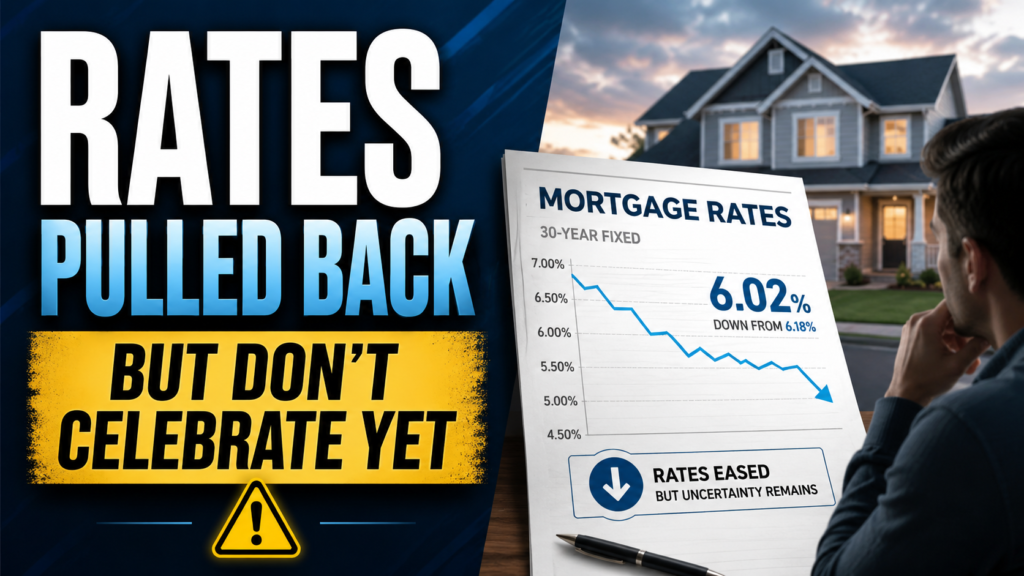
Mortgage News Daily reported that its 30-year fixed-rate index fell from 6.85% to 6.81% on July 24.
The decline came one day after rates reached their highest level in more than a year.
That sounds encouraging until you notice that 6.81% was still higher than nearly every other day during that same period.
In other words, rates improved from a very uncomfortable level to a slightly less uncomfortable level.
This is also why mortgage-rate headlines can sometimes feel contradictory.
One report may say rates declined. Another may say rates remain near long-term highs. Both can be true.
The direction of the move matters, but the starting point matters too.
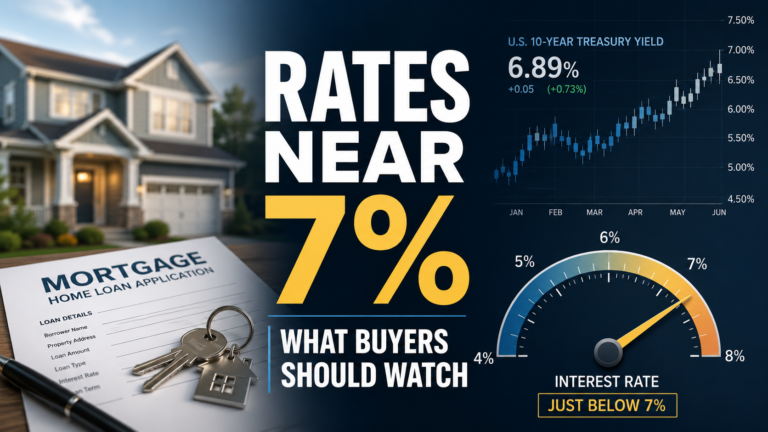
If you want the broader context behind the recent increase, read our earlier update on mortgage rates approaching 7% as stocks stalled.
Why Oil Prices Are Affecting Mortgage Rates
The connection between oil and mortgage rates is not always obvious.
Most people understand that higher oil prices can make gasoline more expensive. The mortgage connection takes a few more steps.
Oil affects transportation, shipping, manufacturing, agriculture, aviation, chemicals, plastics, and many other parts of the economy.
When energy prices rise sharply, investors may become concerned that inflation will remain elevated or begin accelerating again.
Inflation matters to bond investors because inflation reduces the future purchasing power of the fixed payments they receive.
If investors expect more inflation, they may demand higher yields before buying longer-term bonds.
Mortgage rates often move in the same general direction as longer-term bond yields, especially the 10-year Treasury yield. They are not tied together perfectly, but they respond to many of the same concerns.
That is why a sharp rise in oil prices can eventually show up in mortgage pricing—even though the Federal Reserve did not directly raise mortgage rates that day.
For a deeper explanation, read why the 10-year Treasury yield matters for mortgage rates.
Why Rates Improved on Friday
Mortgage News Daily connected Friday’s modest rate improvement with oil prices pulling back from their recent highs.
That makes sense based on the pattern the market has been following.
When oil climbed, inflation concerns intensified and mortgage pricing worsened.
When oil eased, some of that pressure came off the bond market and mortgage rates recovered slightly.
But one better day does not establish a new trend.
Oil prices can move quickly based on military developments, shipping risks, supply concerns, production decisions, and changing expectations about global demand.
A temporary retreat can help rates for a day without solving the larger uncertainty.
That is why buyers should be careful about assuming that Friday’s decline means mortgage rates are now headed steadily lower.
What the Federal Reserve Could Change Next Week
The Federal Open Market Committee is scheduled to meet July 28–29.
The Fed is not expected to directly set consumer mortgage rates. It sets a short-term policy rate, while mortgage rates are more closely influenced by the bond market.
Still, the Fed can move mortgage rates through its policy statement, economic assessment, inflation language, and comments about future decisions.
The market will be watching for clues about:
- Whether officials believe inflation risks are increasing
- How the Fed views the recent rise in energy prices
- Whether economic growth is beginning to slow
- Whether future rate cuts remain possible
- How concerned policymakers are about financial-market volatility
Even when the Fed does exactly what investors expect, the wording around the decision can move Treasury yields and mortgage rates.
That means buyers could see relatively little movement—or another sharp adjustment—after the announcement.
Our guide to what actually drives mortgage rates explains why the Fed is only one part of a much larger market.
What Does a 0.04% Rate Drop Actually Save?
Not much by itself.
Consider a $350,000 mortgage with a 30-year fixed term.
At 6.85%, the estimated principal-and-interest payment would be approximately $2,294 per month.
At 6.81%, the estimated principal-and-interest payment would be approximately $2,285 per month.
That is a difference of roughly $9 per month.
The exact amount will vary slightly depending on rounding and the loan terms, but the larger lesson is the same: a four-hundredths-point change usually will not transform affordability.
Taxes, homeowners insurance, mortgage insurance, association dues, maintenance, and other housing expenses would still need to be added.
You can compare different rates and loan amounts using the Loan Under Review mortgage calculator.
Should Buyers Wait for a Bigger Drop?
There is no universal answer.
A buyer who has flexibility, limited savings, or an uncomfortable payment may reasonably decide to wait.
Another buyer may find a suitable house, negotiate a favorable price, receive seller assistance, and decide that the complete deal works despite the rate.
The mistake is building your entire homebuying plan around the assumption that mortgage rates must fall soon.
They may fall.
They may also remain elevated longer than expected, especially if oil prices stay volatile or inflation concerns continue.
Instead of trying to predict the exact bottom, buyers can prepare for several scenarios:
- Run the payment at today’s rate.
- Run it again at a slightly higher rate.
- Compare the cost of paying discount points.
- Ask whether seller credits could reduce closing costs or buy down the rate.
- Compare lenders using the same loan program, lock period, and assumptions.
- Keep enough money available after closing for repairs and emergencies.
Most importantly, do not confuse the maximum amount a lender may approve with the amount that feels comfortable in your real monthly budget.
Our guide to how much house you can really afford—not what a lender approves can help put that decision in perspective.
What About Refinancing Later?
Some buyers are accepting higher rates today with the plan to refinance when rates improve.
That may work, but it should be treated as a possibility—not a promise.
A future refinance will depend on more than market rates.
The borrower will still need to qualify based on income, employment, credit, debt, property value, equity, loan program, and lender guidelines.
Refinancing also comes with closing costs.
A lower monthly payment is not automatically worthwhile if the upfront costs take years to recover.
The refinance calculator on Loan Under Review can help estimate monthly savings and a simple break-even period.
What Buyers Should Watch Now
The first thing to watch is oil.
If oil continues falling and volatility calms down, mortgage rates may have room to recover further.
If oil spikes again, inflation concerns and bond yields could push mortgage pricing back in the wrong direction.
The second thing to watch is the Federal Reserve meeting.
The decision itself matters, but the language surrounding inflation and future policy may matter even more.
The third thing to watch is your actual lender quote.
National and industry rate indexes are helpful for understanding the direction of the market, but they are not personalized offers.
Your rate will depend on your credit, loan type, down payment, property, occupancy, points, lender credits, lock period, and other pricing factors.
The Bottom Line
Mortgage rates finally improved—but only modestly.
A decline from 6.85% to 6.81% is better than another increase, especially after rates reached their highest point in more than a year.
But it is too early to call this a meaningful turnaround.
Oil remains volatile. Inflation concerns have not disappeared. The Federal Reserve is about to meet, and one better day does not erase a rough week.
Buyers should welcome the improvement without treating it as a reason to rush.
Run the numbers, compare complete loan costs, protect your savings, and make sure the payment still works even if rates do not fall as quickly as everyone hopes.
Loan Under Review provides general educational information and is not a lender, mortgage broker, investment adviser, or financial adviser. Mortgage rates and market conditions can change quickly. Actual loan terms depend on the borrower, property, lender, loan program, points, fees, and market conditions.
Mortgage guidelines and lender requirements can change. This article is general education, not financial, legal, lending, or appraisal advice. Confirm requirements for your situation with an appropriate qualified professional.