On This Page
On This Page- Why FHA Cares About Peeling Paint at All
- The 1978 Rule and What It Really Means
- Exposed Wood Is a Separate FHA Issue
- How Appraisers Are Required to Handle It
- Interior vs Exterior Paint Issues
- What FHA Considers an Acceptable Repair
- How Lender Overlays Can Make It Stricter
- Why This Often Causes Closing Delays
Few FHA appraisal issues cause more confusion, frustration, and last minute delays than peeling paint and exposed wood. Borrowers often hear things like it is just cosmetic or the house is fine to live in, so why does FHA care. The short answer is that FHA cares about safety and durability, not appearance. This post […]
Few FHA appraisal issues cause more confusion, frustration, and last minute delays than peeling paint and exposed wood. Borrowers often hear things like it is just cosmetic or the house is fine to live in, so why does FHA care. The short answer is that FHA cares about safety and durability, not appearance.
This post explains how FHA really treats peeling paint and exposed wood during appraisal and underwriting, why it matters, how appraisers are required to report it, and what borrowers and sellers need to know before it becomes a problem at closing.
Why FHA Cares About Peeling Paint at All
FHA does not have aesthetic standards. They do not care if a home looks dated, ugly, or poorly styled. Peeling paint becomes an issue because of health and safety concerns, especially for homes built before 1978.
Older homes may contain lead based paint. When paint peels, chips, or flakes, it creates a potential exposure risk. FHA takes a conservative approach and assumes the risk exists unless proven otherwise.
That is why peeling paint is not treated as optional or negotiable under FHA. If it is observed by the appraiser, it must be addressed.
The 1978 Rule and What It Really Means
Homes built before 1978 fall under federal lead based paint rules. FHA requires that all defective paint surfaces be repaired on these properties.
Defective paint includes peeling, chipping, flaking, cracking, or scaling paint. It applies to both interior and exterior surfaces.
Homes built in 1978 or later are not subject to the same lead based paint concern, but that does not automatically mean peeling paint is acceptable. If peeling paint is exposing wood or another surface that could deteriorate further, FHA may still require repair.
The year the home was built is critical, but it is not the only factor.
Exposed Wood Is a Separate FHA Issue
Exposed wood is not just about paint. FHA considers exposed wood a durability issue.
Wood that is not protected by paint or sealant can rot, absorb moisture, and deteriorate over time. FHA requires the home to be safe and sound, not just on the day of closing, but for the foreseeable future.
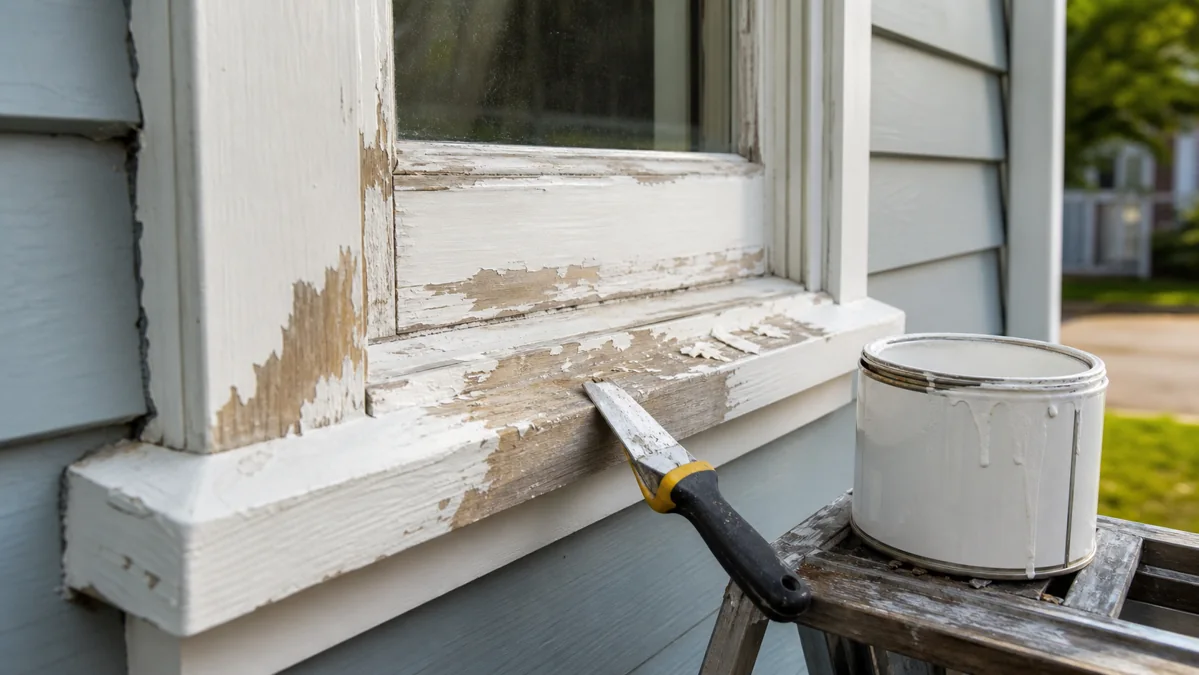
If paint has peeled to the point where bare wood is visible, the appraiser is required to call it out. Even on newer homes, exposed wood can become a required repair.
This is where borrowers often get confused. They hear peeling paint and think lead. FHA is also thinking long term structural durability.
How Appraisers Are Required to Handle It
FHA appraisers are required to note observable deficiencies. They are not inspectors, but they cannot ignore obvious issues.
If an appraiser sees peeling paint or exposed wood during the inspection, they must comment on it and typically make the appraisal subject to repair.
Appraisers do not have discretion to waive peeling paint on pre 1978 homes. They also cannot rely on photos provided later to clear the issue. Repairs must be completed and verified.
This is not an appraiser being picky. It is a requirement tied directly to FHA guidelines.
Interior vs Exterior Paint Issues
Interior peeling paint is treated the same as exterior peeling paint from an FHA standpoint. If it is defective, it must be corrected.
Interior areas that frequently trigger issues include window sills, door frames, baseboards, and stair railings. These are common wear areas where paint breaks down over time.
Exterior issues often appear on trim, fascia, soffits, siding, porch railings, and decks. Even small areas can trigger a repair condition if they are visible and accessible.
If an appraiser can see it, FHA expects it to be fixed.
What FHA Considers an Acceptable Repair
FHA does not allow quick cover ups. Simply painting over peeling paint without proper preparation is not acceptable.
The defective paint must be scraped, sanded, and properly prepared. The surface must then be repainted or sealed to prevent future deterioration.
On pre 1978 homes, the repair must be done in a way that addresses potential lead based paint risk. That usually means proper surface preparation and cleanup.
The appraiser will return to verify that repairs were completed correctly. If peeling paint is still visible, the loan cannot move forward.
How Lender Overlays Can Make It Stricter
FHA guidelines set the minimum standard, but lenders can and do apply overlays.
Some lenders require repairs even when FHA might allow an exception. Others may require more detailed documentation or photos before allowing a reinspection.
This is why one lender may seem more difficult than another on the same issue. It is not always FHA. Sometimes it is internal lender policy.
Borrowers should understand that arguing fairness does not override overlays.
Why This Often Causes Closing Delays
Peeling paint issues usually surface after the appraisal is complete. That means the clock is already running.
Sellers may be slow to respond. Contractors may not be immediately available. Weather can delay exterior repairs. All of this can push closing back.
If the delay is long enough, underwriters may require updated income documentation, bank statements, o
Mortgage guidelines and lender requirements can change. This article is general education, not financial, legal, lending, or appraisal advice. Confirm requirements for your situation with an appropriate qualified professional.